Welcome to our free classical music site

Do you write about classical music? Are you a blogger? Want to team up with Classical Connect? Send us a message, let's talk!
Do you write about classical music? Are you a blogger? Want to team up with Classical Connect? Send us a message, let's talk!




This Week in Classical Music: August 25, 2025. Krenek. Last week marked the 125th anniversary of the Austrian-American composer Ernst Krenek, and we’re following up on our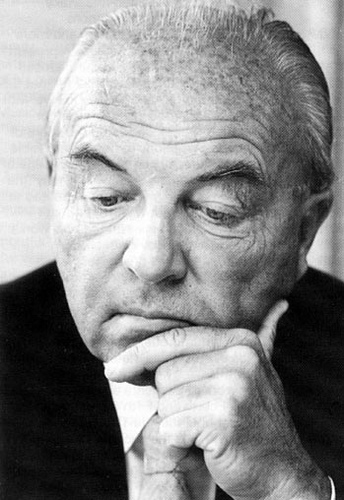 promise to mark it this week. Krenek, whose name is pronounced krzhenek was born Křenek, and the Czech letter ř is pronounced as “r-zh” as, for example, in Antonín Dvořák’s last name (Krenek’s father was Czech). Krenek replaced ř with an r when he moved to the US. One of the reasons we wanted to get back to Krenek is that we believe he’s a talented composer who’s seriously underappreciated. Krenek was one of the most prolific composers of the 20th century, and, at some points in his career, one of the most celebrated. He composed in many different styles, but he’s not the only composer with creative flexibility: Stravinsky, for example, also went through distinctly different periods. And like Stravinsky, Krenek experimented with such different idioms as atonal and Neo-Classical, though Krenek started with the atonal, while Stravinsky came to it later in his career. These days, Krenek’s music is rarely performed, which is a pity.
Krenek was born in Vienna on August 23rd of 1900. He studied with the then-famous composer Franz Schreker, practically forgotten today. During WWI, he was drafted into the Austrian army but spent most of the time in Vienna, continuing his studies. In 1920, he followed Schreker to Berlin, where he was introduced to many musicians; there he met Alma Mahler, Gustav’s widow, and her daughter Anna. By the time they met, Alma had already divorced her second husband, the architect Walter Gropius, and was living with the poet Franz Werfel. Krenek fell in love with Anna and married her in 1924, though their marriage fell apart a few months later. That aside, his time in Berlin was very productive: Krenek wrote 18 large-scale pieces between 1921 and 1924, many of which were radically atonal and influenced by Schoenberg. At Alma’s request, he attempted to complete Mahler’s unfinished 10th Symphony, but dropped the project as he realized that most of it was too underdeveloped.
In 1925, Krenek traveled to Paris where he met the composers of Les Six; under their influence, he decided that his music should be more accessible and wrote a “jazz-opera” Jonny spielt auf (Jonny Plays), which became very popular. Krenek followed it up with three more one-act operas, one of them, Der Diktator, based on the life of Mussolini. In 1928, Krenek returned to Vienna, where he befriended Berg and Webern. He became interested in the 12-tone technique, a form of serialism which attempts to give each of the 12 notes of the scale equal weight. In 1933, he wrote an opera. Karl V, using this technique. Its premiere in Vienna was cancelled (the politics of art, following politics in general at the time, were turning toward things simple and nationalistic), but it was staged in Prague in 1938. Needless to say, it never gained the popularity of Jonny spielt auf. The Nazis labeled Krenek’s music “radical” (they also claimed that Krenek was Jewish, which he wasn’t). Things were getting difficult in Austria as well, and soon after the Anschluss, Krenek emigrated to the US. He taught in several conservatories and universities and eventually settled in Los Angeles (he moved to Chicago in 1949 to teach at the Chicago Musical College but returned to the West Coast because of the cold winters). He taught at Darmstadt in the early 1950s (Boulez and Stockhausen were among the attendees), continued composing using the serial technique, and experimented with electronic music. His last piece was written when Krenek was 88. He died in Palm Springs on December 22nd of 1991. Here’s an excerpt from Krenek’s Lamentatio Jeremiae prophetae for the unaccompanied choir. Lamentations contains the music for three days of Holy Week: Maundy Thursday, Good Friday, and Holy Saturday. This is the Good Friday section. The piece was written in 1941 in New York, during a difficult period in Krenek’s life, but also the one that provided him with access to the music of Ockeghem, the polyphony of which influenced Lamentations. The music is atonal and complex, but we find it very interesting. Permalink
This Week in Classical Music: August 18, 2025. Debussy and more. Our apologies to the composers with this week’s anniversaries, first and foremost to Claude Debussy, who was born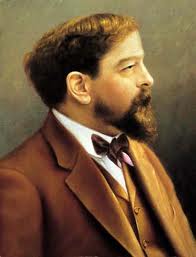 August 22nd of 1862: all we can do is to point to many of our past entries dedicated to this great composer, for example, here, here, here, and here. Our haste is especially inappropriate (if unavoidable) as there are several more very interesting composers we’d like to commemorate properly. For example, Karlheinz Stockhausen, one of the most important composers of the second half of the 20th century, was also born this week, on August 22nd of 1928. Antonio Salieri was born on this day 275 years ago. Going even further back, we have Jacopo Peri, who is considered the author of the first opera, Dafne, written in 1597. Peri was born on August 20th of 1561, either in Rome or in Florence.
Lili Boulanger, a composer and the younger sister of Nadia Boulanger, also a composer and a teacher, was born in Paris on August 21st of 1893. Lili was the first woman to win the prestigious Grand Prix de Rome. She was only 24 when she died of tuberculosis. Another French composer, Benjamin Godard, was born on this day, August 18th, in 1849. He was one of the few Jewish-French composers of the 19th century; we know of only two more: Alkan and Halévy (both Meyerbeer and Offenbach, also Jewish, were born in Germany, even though they spent a lot of time in France).
Ernst Krenek’s 125th anniversary is on August 23rd. We find his music interesting and underappreciated, so we’ll come back to it next week. That’s all for now.Permalink
This Week in Classical Music: August 11, 2025. On Musical Diversity. This week presents us with a group of composers who demonstrate the infinite diversity of music - not the artificial diversity that became fashionable in the early 2020s, but the genuine kind: the diversity of sound,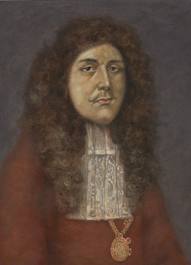 style, and idiom. History selected this group for us, and we couldn’t have done much better ourselves. None of our composers belong to the Pantheon of the “greats,” but all were talented, and their music represents the period, the place, and, of course, their creativity. The mix is unusual as there are three Englishmen and not a single German, and while they span four centuries, some periods are missing. Even with these caveats, this accidental group represents tremendous variety. The oldest of our composers is Heinrich Ignaz Biber, an Austrian who was also a talented violinist; he was born in Bohemia on August 12th of 1644. His best-known compositions are a set of violin pieces titled “Rosary Sonatas.” Biber, like his contemporary Arcangelo Corelli, also a composer-violinist, worked in the Baroque style. Here’s one of the Rosary sonatas, no. 3.
Nicola Porpora, an Italian, was born 42 years after Biber, on August 17th of 1686. Porpora was born in Naples, a city famous for its opera and its singers. Porpora composed dozens of operas and was Handel’s rival in London. He was renowned as a voice teacher: among his students were Farinelli and Caffarelli, two of the most famous castrati singers. He also taught several composers, Haydn among them. Here’s the aria Alto Giove, from Porpora’s opera Poliferno. It’s also “baroque,” like Biber’s compositions, but how different in every sense!
Maurice Greene was just 10 years younger than Porpora (he was born on August 12th of 1696, in London). Greene is known for his anthems, of which Lord, Let Me Know Mine End is probably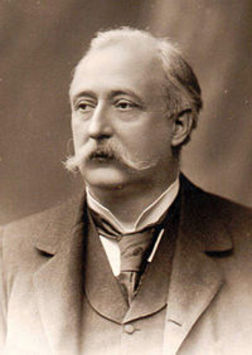 the most popular (here).
We have to jump over two centuries to get to Gabriel Pierné, a French composer born on August 16th of 1863, in Metz, capital of Lorraine. Seven years later, Lorraine was annexed by the victorious Germans, and Piernés moved to Paris. Gabriel studied with Jules Massenet and César Franck at the Paris Conservatory and won the Prix de Rome. Here’s the second movement of Pierné’s Piano Quintet.
Two Brits follow: Samuel Coleridge-Taylor, born on August 15th of 1875, and that most idiosyncratic of the composers, Kaikhosru Shapurji Sorabji; he was born August 14th, 1892. Coleridge-Taylor was biracial (his mother was English, his father – a descendant of freed slaves who settled in Sierra Leone). He was a popular composer, probably more so in the US than in the UK (it was a New York critic who called Coleridge-Taylor the “African Mahler”; during one of his trips to the US, he was invited to dinner by President Theodore Roosevelt). Like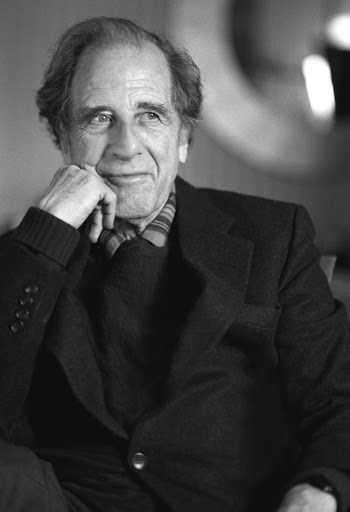 Coleridge-Taylor, Sorabji was also biracial, though it’s rarely brought up: his father was a Parsi from Bombay, his mother was English. Sorabji wrote some of the longest pieces in the history of Western music. His extravagantly titled work, Opus Clavicembalisticum, was once listed in the Guinness Book of Records as the longest piano piece ever composed: the complete performance runs about four hours. Here’s a much shorter piece, the first part of Sorabji’s Piano Sonata no. 1.
Finally, two more. An eclectic and delightful Frenchman, Jacques Ibert, born on August 15th of 1890, and Lukas Foss, one of the most original composers of his generation, who was born on the same day in 1922. Foss, a Jewish Berliner, emigrated to the US in 1937. Here’s Foss’s Thirteen Ways of Looking at a Blackbird. Let’s look back at where we started and compare Foss’s song with the pieces for the voice by Porpora and Green. This is what we call real diversity. Permalink
This Week in Classical Music: August 4, 2025. France Musique. Three French composers were born this week: Cécile Chaminade, on August 8th of 1857, André Jolivet on the same day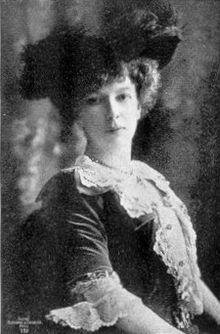 in 1905, and Reynaldo Hahn, on August 9th of 1874. Chaminade’s music was rarely performed till 2020, when her importance as a woman brought her work to the forefront of the classical repertoire, both in live performances and on the radio. We think that in her case, there’s some redeeming quality to that burst of enthusiasm, even if it’s fading again: Chaminade was a serious composer, if not very original, and encountered difficulties particular to her gender: we should not underestimate the misogyny of the critics of her time. Her music was well-accepted in her time, and she was even awarded the Légion d’Honneur. She composed over 400 pieces, most of which were published. Later in her life, Chaminade reverted to writing mostly smaller salon pieces, which became popular in England and the US, where many “Chaminade clubs” had been established. She made a trip to the US in 1912, visiting 12 cities. Here’s Chaminade’s popular Scarfe Dance. Lincoln Mayorga is the pianist.
We find André Jolivet’s music more interesting – but of course, he and Chaminade shouldn’t be compared, as Jolivet lived in a different time, half a century after Chaminade. Jolivet went through phases: he started as a follower of Debussy and Ravel; later, after hearing Schonberg’s music in 1927 (a rare occasion in France) he turned to the atonal idiom, encouraged by Edgard Varèse, an influential French-American avant-garde composer, and later by Olivier Messiaen. During WWII, he reverted to tonal music and was quite eclectic later in his life. You can read more about Jolivet here.
These days, Reynaldo Hahn is better known as Marcel Proust’s lover than as a composer. Hahn was born in Venezuela, but his family moved to Paris when he was three. He started composing when he was eight. At the age of ten, he entered the Paris Conservatory, where he studied with Massenet, Gounod, and Saint-Saëns. He was accepted into the popular salons of Paris when he was still in his late teens. It was in one of these salons that in 1894 he met Marcel Proust, then just an aspiring writer. Even though their affair was brief, they remained very good friends till Proust’s death in 1922. Hahn was half-Jewish and became a vociferous supporter of Dreyfus during the affair that split France in half (the half-Jewish Proust was also a Dreyfusard). Hahn became a naturalized Frenchman in 1907 and volunteered for the army at the outbreak of WWI. After the war, he composed several of his most popular pieces: the light opera Ciboulette and the Piano Concerto, which was premiered by Magda Tagliaferro. Here’s the Concerto; the soloist is Angelyne Pondepeyre, the Orchestre National de Lorraine is conducted by Fernand Quatrocchi. Permalink
This Week in Classical Music: July 28, 2025. Catching up (yet again). This week is unusually fruitless: of the composers, there’s only Hans Rott, who was talented and mad, and died young. He wrote music that, in some ways, out-Mahlered the early Mahler. Rott was born in Vienna on August 1st of 1858, two years before Mahler, and died in a mental hospital at the age of 25 (as Robert Schumann did 28 years earlier, and Hugo Wolf would, 19 years later). We believe Rott had tremendous talent (Mahler thought he was “a musician of genius”), and who knows how much he could’ve created had he been healthy – as it was, Rott composed for just six years, from the age of 16 to 22, after which things went downhill. You can read more about Rott in our earlier entry and listen to the 3rd, probably the most “Mahlerian,” movement of his Symphony in E Major, subtitled Frisch und lebhaft (Fresh and lively) here. Paavo Järvi conducts the Frankfurt Radio Symphony Orchestra.
By coincidence, this week there were few performers and conductors as well. To compensate for this paucity, we’ll turn back to the previous week, which at the time we dedicated to the New York Times and the deterioration of musical culture in our country. While we were commenting on woke philistines and the general decline of classical music, we missed several anniversaries, especially those of interpreters, pianists and singers in particular. So here we go.
July 23rd was the birthday of two pianists and one singer: Leon Fleisher and Maria João Pires, and Susan Graham. Leon Fleisher, who was born in San Francisco in 1928, was one of the greatest pianists of the 20th century (his performance of both Brahms’ piano concertos, with the Cleveland Orchestra and George Szell, was superlative). He established himself in the early 1950s and had a very successful career till 1964, when his right hand stopped working because of a neurological condition called focal dystonia. Undeterred, Fleisher switched to a left-hand repertoire, such as Ravel’s Concerto for the Left Hand and Prokofiev’s Piano Concerto no. 4. Fleisher returned to his regular repertoire in 2004, after 40 years of medical treatment. He was also a great teacher (André Watts, Yefim Bronfman, and Hélène Grimaud were among his many students).
Maria João Pires just turned 82, and she still performs. Born in Lisbon, she studied in Portugal and Germany. She launched her international career rather later, in the 1980s. Not being fond of a career as a star, she took long pauses between performance seasons, sometimes disappearing for years, as she did between 1978 and 1982. Pires’s Mozart is great, as is her Chopin, but of course, her repertoire is much broader than that: she also made wonderful recordings of Bach, Beethoven, Schubert and Schumann.
Susan Graham is 65, which is hard to believe; she’s one of the best mezzo-sopranos America has ever produced. Her Cherubino in Le nozze di Figaro and Rosina in Il barbiere di Siviglia are pure delight.
Isaac Stern was born on July 21st of 1920, 105 years ago. He was not just a great violinist; he was a cultural figure, the likes of which we greatly miss these days.
We should also mention two conductors: Igor Markevitch, who was also a composer. Born on July 27th of 1912, in Kiev, then the Russian Empire, he spent most of his life in France and Italy. Finally, Riccardo Muti turns 84 today. Permalink
This Week in Classical Music: July 21, 2025. The New York Times and Classical Music. Several days ago, Variety magazine, a purveyor of entertainment news, had a scoop of a different kind: it obtained a New York Times internal memo, which detailed the reassignment of several cultural critics. The critics in question covered TV, pop music, theater, and included Zachary Woolfe, who writes about classical music. As part of the “revamp,” all of them were offered new positions within the newspaper, and at the moment, this leaves the NY Times without a classical music critic. This void made us think (again) about the role of music in our society in general and the Times in particular. Some years ago, it would’ve been unimaginable for the NY Times not to have a classical music critic: it was deemed so important that the paper had several writers covering multiple events and publishing many articles a week (Woolfe’s output was minuscule in comparison). We still remember the names of some of the great critics of the past: Harold Schonberg, the chief music critic for many years, Donal Henahan, who replaced him, and then followed by Edward Rothstein and Bernard Holland. Paul Griffiths also worked there, as did the wonderful Alex Ross, who later moved to the New Yorker and is one of the few who still publish interesting articles and books on music.
Not only was classical music important, but even the critics had a place in our culture: when Andrew Porter, who had written about music for 20 years at the New Yorker, resigned his position to move back to the UK, Edward Rothstein wrote a poignant article about him and his work. Some of the old coverage is unimaginable these days: for example, when, during a recital at Carnegie Hall, Kirsten Flagstad announced her retirement, the news made it to the front page of the Times. Yes, the front page.
It seems that two processes are working in parallel here: for one, classical music is losing its place in our culture, but secondly, newspapers are trying to get away from it at an even faster pace. For the lovers of classical music, the first trend is unfortunate but inevitable. We don’t live in the first quarter of the 20th century, when the parlor of every middle-class home was expected to have a piano, and piano manufacturers existed in every large city in the country (300,000 pianos were produced in 1924 when the US population was 1/3 its current size). Eventually, active music-making was replaced by passive listening: the radio and the phonograph killed the piano. Still, for a long time, music retained its cultural significance, and it was only at the end of the 20th century that the slide began in earnest. Whether this only coincided with the rise in identity politics or both processes fed on each other isn’t clear. But what we do know is that at some point, the cultural elites (and the NY Times is part and parcel of it) embraced identity politics and ran with it. During the worst days of wokeness, in 2020, Anthony Tomassini, then the chief (and by then practically the only) classical music critic of the Times, called for an end to blind additions, because, as he said, “the audition process should take into account race, gender and other factors,” not simply the talent or abilities of the performer. This absurd and pernicious notion was endorsed by many musical organizations and, what is worse, by foundations and endowments that constitute the financial base of classical music. In the meantime, classical music itself became associated with “dead white men,” a double offence when, for many in the cultural establishment, “white” became a sin, and “men” were linked to “toxic masculinity.” No wonder the Times decided to shy away from classical music.
Even though it seems that the worst of wokeness is behind us, what we have is classical music as a diminished art form, and the NY Times is partly responsible for the damage. Combine this with the paper’s past strong tradition in support of music, and you have an institution in a highly ambivalent position. We don’t expect the changes at the Times to improve on the mediocrity of the current state, but we’ll certainly watch the developments. Permalink