Welcome to our free classical music site

Do you write about classical music? Are you a blogger? Want to team up with Classical Connect? Send us a message, let's talk!
Do you write about classical music? Are you a blogger? Want to team up with Classical Connect? Send us a message, let's talk!




This Week in Classical Music: October 26, 2026. Travel I. Classical Connect is on the way to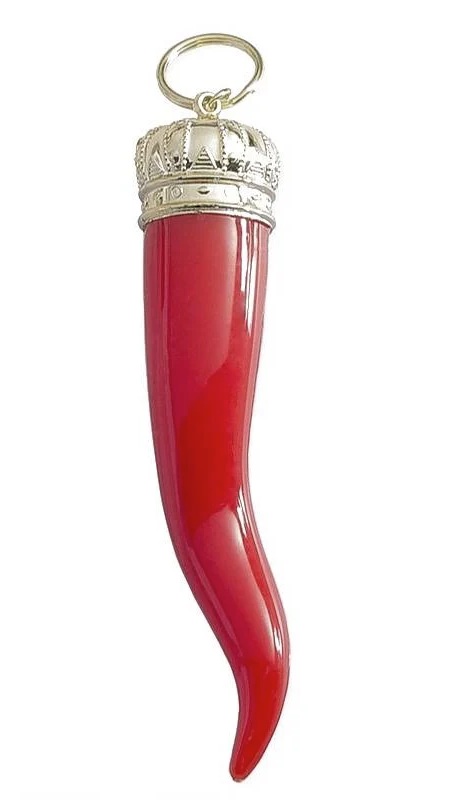 Naples, the “real” Naples in Italy – not that there’s anything wrong with Naples, Florida, which has its own Philharmonic Orchestra and interesting chamber music series. But Naples, Italy, has a history stretching back more than 3,000 years and, what’s important to us, a glorious history of classical music. That’s what we’ll write about when we come back.
The red horn (cornicello) is a symbol of Naples.
Permalink
This Week in Classical Music: October 19, 2026. Liszt and the 20th century. This is a very full week for a small entry. Two of the very popular composers have their anniversaries, and then there are several more, talented and interesting. The popular ones are Liszt and Bizet. Franz Liszt was born on October 22nd of 1811, in the village of Doborján, in the Kingdom of Hungary (it’s now in Austria, called Raiding). His family was German-speaking; he never learned Hungarian. Later in his life, when he visited Pest, he proclaimed himself Hungarian, but his music was firmly based in the German tradition, despite all the Hungarian Rhapsodies. A child prodigy, he studied with Carl Czerny and made his public debut at the age of 11 in Vienna. In 1823, he moved to Paris. By then, he was already earning good money from his public performances. He settled in Paris, concertizing widely, and became part of the elite society of writers and poets, which included Victor Hugo, George Sand, her lover Frédéric Chopin, Alfred de Vigny, Berlioz, Eugène Delacroix, and others. He also met and befriended Paganini – all that before he turned 23. We’re not going into the details of his long, eventful, and very interesting life (we did write about Liszt on many occasions, including the old entry we published on his 200th birthday, here). Our library has a large selection of his works; it’s worth browsing.
The second popular composer is George Bizet, though he didn’t live long enough to accept his fame: when he died in 1875, at the age of 36, he thought his opera, Carmen, was a failure. And he was right to an extent: the critical and public reaction to the premiere, at the Opéra-Comique three months earlier, was lukewarm at best, and so was the initial run. It was not till the staging of Carmen in Vienna later that year that it achieved recognition: despite deviation from the original French production, it was a success. From there on, opera’s (and its creator’s) fame only grew, conquering one capital after another, so much so that today, by some accounts, it’s the most often performed opera in the world!
Charles Ives, Ned Rorem, and Lucian Berio were also born this week, on October 20, 1874, October 23, 1923, and October 24, 1925, respectively. Ives is one of the most important American composers; Berio – one of the most important composers of the European avant-garde, and Ned Rorem wrote many wonderful songs and a scandalous memoir of his life in Paris.Permalink
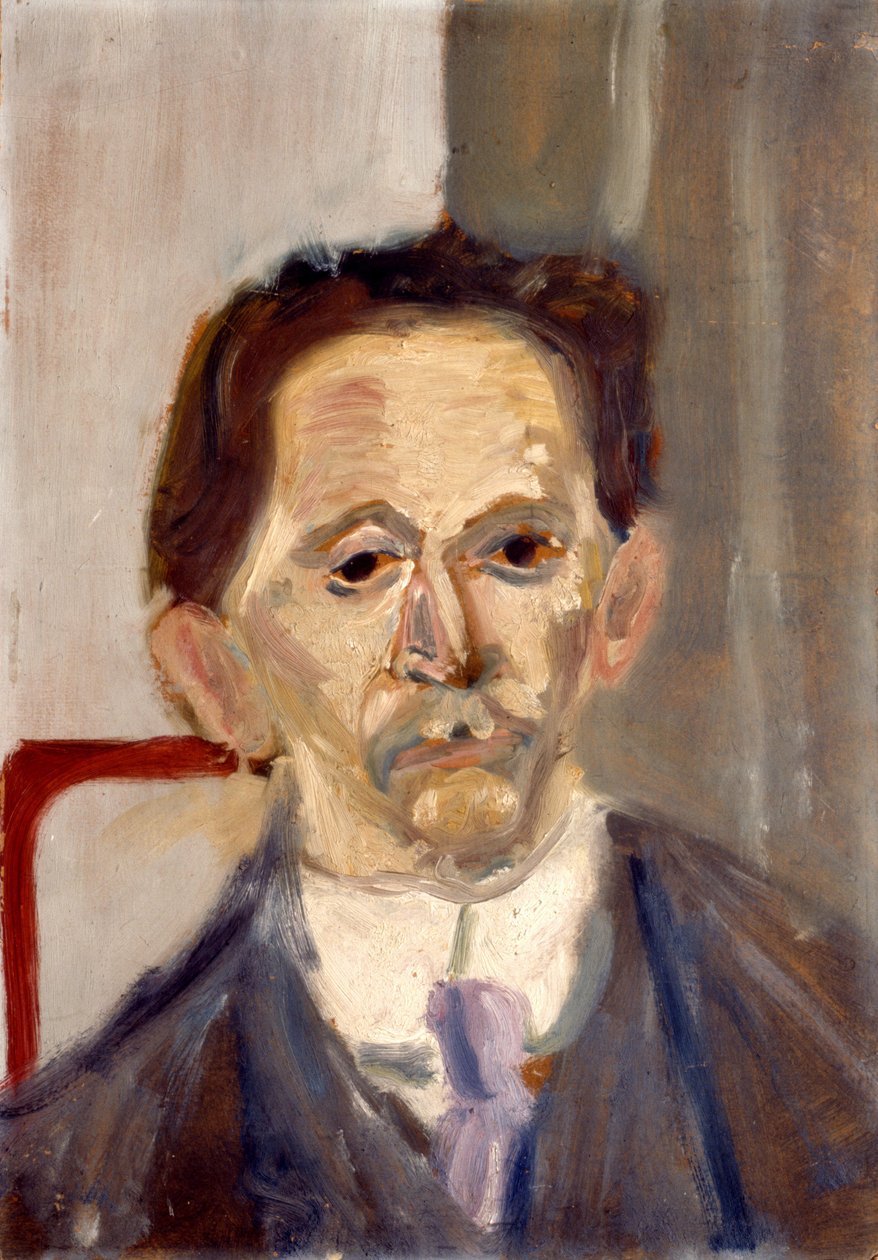 Alexander von Zemlinsky was born on October 14th of 1871 in Vienna. He was born ¼ Jewish, but his whole family converted to Judaism, and he was raised Jewish (the aristocratic “von” in his name was his own invention). He fell in love with Alma Schindler, whom we know as Alma Mahler; that didn’t work out, but Zemlinsky eventually became a good friend of Gustav’s. He was a prominent teacher: among his students were Arnold Schoenberg, Anton Webern, Alban Berg, and many others. He was also a respected conductor (among his assistants were Erich Kleiber, Webern, and George Szell). But we know him as a composer, even if his talent was acknowledged very late.
This Week in Classical Music: October 12, 2026. Pavarotti and Zemlinsky. Today is Luciano Pavarotti’s birthday: he was born in Modena in 1935. His was probably the most recognizable (and beautiful) voice since the era of Giuseppe Di Stefano and Franco Corelli (some would say since Beniamino Gigli).
Zemlinsky started composing early, and by 1893 his music was publicly performed. In 1985, he was also conducting (in one of his orchestras, Schoenberg played the cello). In 1907, Zemlinsky joined Mahler in the Vienna Hofoper, then moved to the German opera of Prague and eventually to Berlin, where he became a conductor at the Kroll Opera. When the Nazis came to power, he fled to Vienna and, after the Anschluss in 1938, to the US via Prague. In the US, he remained practically unknown, even while Schoenberg and many of his other colleagues were feted. He suffered a stroke and died in Larchmont, NY, on March 15th of 1942. Here, from 1924, is Zemlinsky’s Third Quartet, performed by the La Salle Quartet.
Two Italians were also born this week, both on October 18th: Luca Marenzio, in 1553, and Baldassare Galuppi, in 1706. Marenzio lived during the era of the High Renaissance in music and was famous for his madrigals. He deserves a separate entry, which we hope to provide. These days, Galuppi is known mostly for one of his sonatas (no. 5), as performed by Arturo Benedetti Michelangeli (here), but during his lifetime, he was famous for his operas, both comic and serious. Even Catherine the Great, the Empress of Russia, knew of Galuppi and invited him to come to St. Petersburg. He spent three years there as court composer and conductor, before returning to Venice. He died in 1785.Permalink
This Week in Classical Music: October 5, 2026. Three pianists. Several important composers and three pianists, one of whom is our favorite, were born this week. We’ll get to the pianists in a minute, but first, the composers.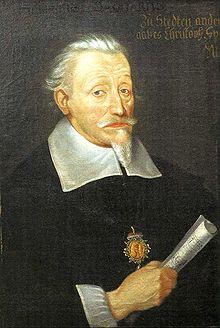 , considered the most important German composer before Bach (he worked during the early Baroque while Bach was at the tail end of the period, when many of his contemporaries were already moving toward the Classical idiom), was born in Köstritz, Thuringia, on October 8th of 1585. Here is Part I of his funeral music (the first one to use the text in German), Musikalische Exequien. It’s called “Concerto in the form of a German funeral mass.”
Giuseppe Verdi, one of the greatest opera composers ever (and many would say the greatest), was born on October 9th (or 10th) of 1813, in Roncole, near Parma. We’ve written about Verdi so many times that all we can do now is illustrate his art with an excerpt from one of his operas. Here, from Act I of La Traviata, starting with E strano!, аrе Joan Sutherland and Luciano Pavarotti. They’re accompanied by the National Philharmonic Orchestra with Richard Bonynge, who just turned 98!
Camille Saint-Saëns, loved by many, but not as much by us (even if we admit that he was a talented composer and apologize to his admirers), was born in Paris on October 9th of 1835. Here’s Saint-Saëns’s Piano Quintet, a piece that isn’t performed often. It’s recorded by Christina Ortiz and the Fine Arts Quartet.
And now to the pianists. Our favorite is Evgeny Kissin. We like him not only because h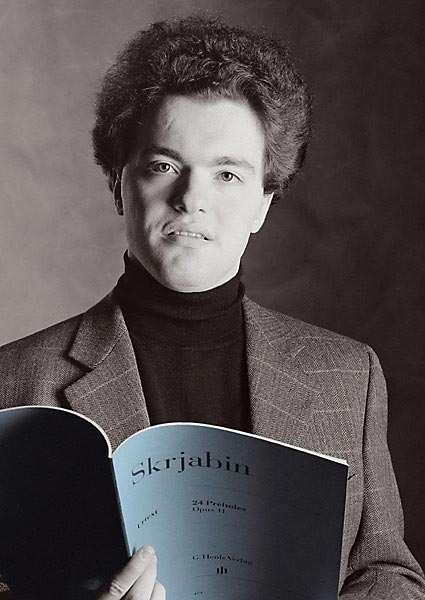 e's a wonderful musician and technically phenomenal; we also very much appreciate his political stance. He’s adamantly opposed to Putin and an aggressive Russia and is very supportive of Ukraine, the victim of Putin’s aggression. He also supports Israel in its fight against enemies, whether the homicidal ones, like Hamas, or just the regular antisemites.
Kissin was born in Moscow on October 10th of 1971, so he’s about to turn 55. His first and only teacher, both at the Gnessin School or later at the Gnessin Institute, was Anna Kantor. Ms Kantor died in June of 2021 at the age of 98; she was living in Prague, where Kissin had been residing since 2016. Kissin made his orchestral debut, playing Mozart’s Piano Concerto no. 20, at the age of 10. One year later, he gave his first piano recital. In 1984, he played both of Chopin’s piano concertos at the Great Hall of the Moscow Conservatory; the concert was a revelation. In 1985 and thereafter, he was allowed to perform abroad; in 1988, he (famously) played Tchaikovsky’s First Piano Concerto with Karajan and the Berlin Philharmonic. Kissin left Russia in 1991, the year the Soviet Union ceased to exist. Kissin has a tremendously successful career, performing all over the world. We may not always agree with his interpretations, but there’s absolutely no doubt that he’s one of the greatest pianists of his generation. Here’s Evgeny Kissin playing Beethoven’s Piano Sonata no. 3.
The Russian (Jewish) – American pianist Shura Cherkassky was born on October 7th of 1909, in Odesa (then Odessa). He was widely considered to be the latest pianist in the great Romantic tradition of the 19th century. Here’s Cherkassky playing Chopin’s Nocturne op. 27, no. 2 in D-flat major, with a wonderful freedom in dynamics and tempo (we find his rubatos, something we’re usually concerned about, quite stylish).
And finally, the Swiss pianist Edwin Fischer, one of the great interpreters of the music of Bach, was born on October 6th of 1886, in Basel. Permalink
This Week in Classical Music: September 28, 2026. Florent Schmitt and more. We’ll be the first to admit that this isn’t a very exciting week. The French composer Florent Schmitt was born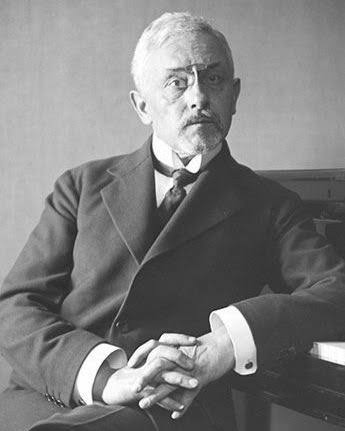 on September 28th of 1870 in the village of Blâmont, Meurthe-et-Moselle, Lorraine. He’s probably better known for shouting Heil Hitler! at the concert featuring the music of the Jewish, and by then exiled, Kurt Weil, than for any of his own compositions. One still could find some interesting pieces in his output. Three years ago, we posted a detailed (and we think rather interesting) entry on Schmitt, here, and illustrated it with two pieces: music to the ballet La tragédie de Salomé (here), and his Piano Quintet (here). This time, we present two of his 1920 Antoine et Cléopâtre suites, written for André Gide's translation of Shakespeare’s play. The play was staged at the Paris Opera, with the famous dancer Ida Rubinstein as Cleopatra. Suite no. 1 is here and no. 2 here.
Another Frenchman, Paul Dukas, was also born this week, on October 1st of 1865, in Paris, into a wealthy, assimilated Jewish family. He’s known for just one work, The Sorcerer's Apprentice, even though he also wrote an opera, a symphony, a piano sonata, and several other pieces.
Two Russian pianists were also born on October 1st: the great Vladimir Horowitz, in 1903, and Vera Gornostayeva, in 1929. Horowitz is one of the most celebrated musicians of the 20th century; Gornostayeva, on the other hand, was mostly known in the Soviet Union, both as a wonderful pianist and a great teacher. Among her students were Alexander Slobodyanik, Pavel Egorov, Eteri Andjaparidze, Ivo Pogorelich, Sergei Babayan, Vassily Primakov, Lukas Geniušas, Vadym Kholodenko, and many others. Vassily Primakov is instrumental in bringing her art to Western audiences.
And speaking of musicians born in Russia, David Oistrakh’s birthday is September 30th.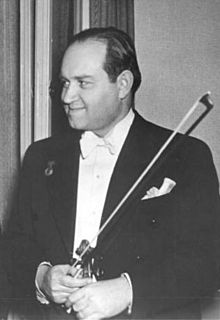 He was born in Odesa (then Odessa) in 1908. In the Soviet Union, where rankings were of utmost importance, Oistrakh was considered the greatest violinist. From age five, he studied with Pyotr Stolyarsky, the founder of the Odessa Violin School (among his pupils were Nathan Milstein, Boris Goldstein, Elizabeth Gilels, Mikhail Fikhtengoltz, Valrey Klimov, winner of the First Tchaikovsky Competition, and many others). In 1935, Oistrakh won the second All-Union Competition of Musical Performers, then took the second prize in the Henryk Wieniawski International Competition (Ginette Neveu took the first prize), and two years later won the Ysaÿe Competition in Brussels, which made him world-famous. International music competitions were important to Stalin – for him, they were the way to prove that the Soviet Union was an advanced country, and the young winners, Oistrakh among them, were awarded medals and benefits, such as comfortable apartments, on par with the party officials, something not available to regular citizens. Oistrakh performed widely in the Soviet Union, and after WWII, became one of the few musicians who were allowed to travel internationally. One way or another, Oistrakh was a phenomenal violinist who made many exceptional recordings. Here’s one of them, from 1969: David Oistrakh plays Brahms’s Violin Concerto with the Cleveland Orchestra under the direction of George Szell.Permalink
This Week in Classical Music: September 21, 2026. Bruno Walter at 150, Part 2. When Hitler became Chancellor of Germany on January 30th of 1933, Bruno Walter was in New York.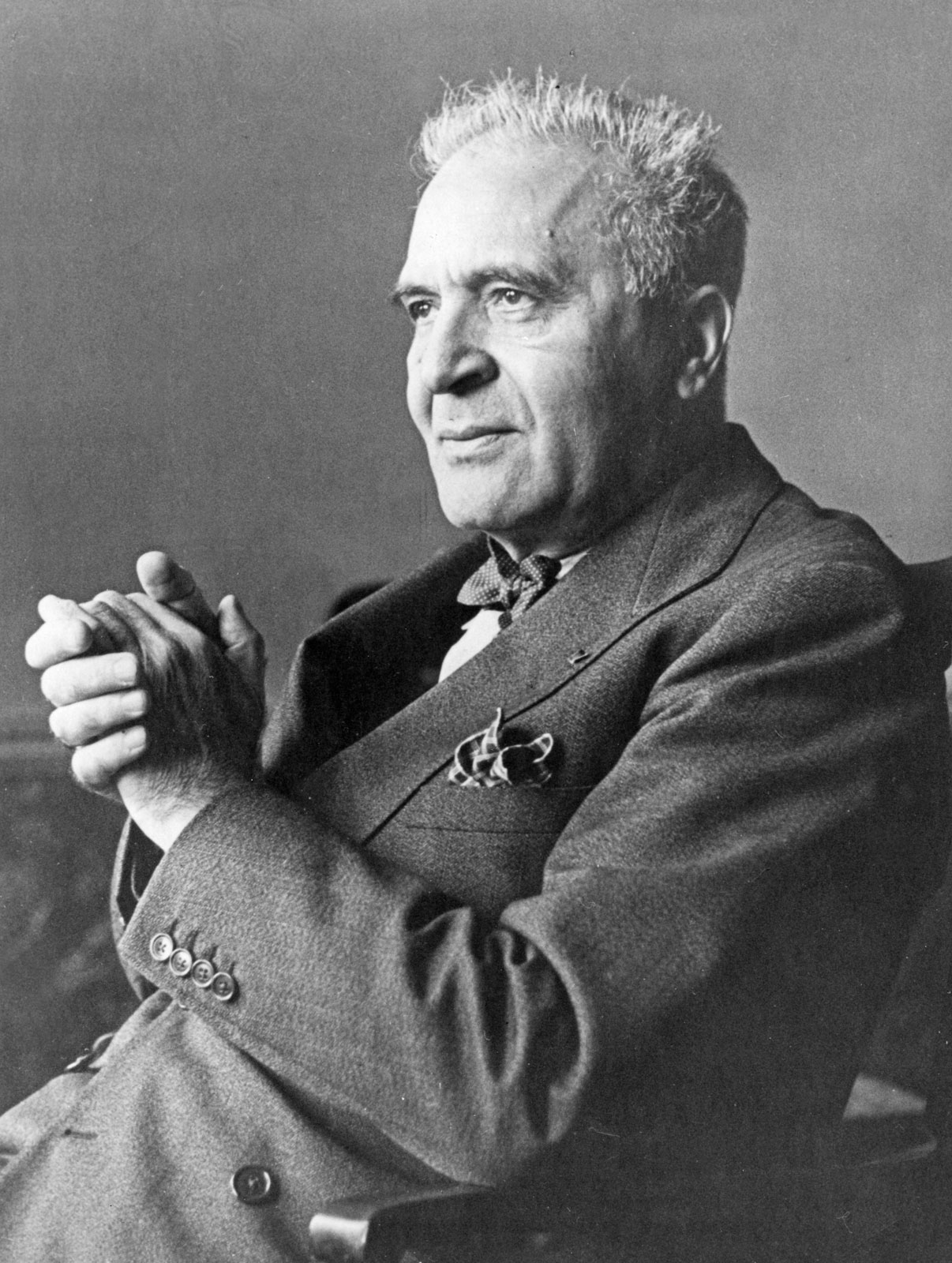 With concerts scheduled in Leipzig (he was then principal conductor of the Gewandhaus Orchestra), he sailed to Germany. Hitler hated Jewish conductors, Walter in particular, but none of the “official” anti-Jewish laws had yet been passed. Nonetheless, the latent German antisemitism was spreading all over the country, as if magically released, and flaring up locally. Leipzig, in the state of Saxony, hadn’t yet been as Nazified as, for example, Prussia; the “coordination laws” that rendered the states powerless hadn’t been passed. And still, the Chief of Police of the city decided that he wouldn’t permit a Jewish conductor to perform in his city. The orchestra board tried to resist, timidly, but to no avail: in the end, the concerts were cancelled. The same thing happened in Berlin, where Walter was about to lead the Berlin Philharmonic. Walter resigned his posts and left Germany for Austria.
He stayed in Austria for the next five years, till the Anschluss in March of 1938. There, he conducted the Vienna Philharmonic, staged operas and actively participated in the Salzburg Festival. In 1936, he became the Artistic Director of the Vienna State Opera, a position held by his beloved teacher and friend, Gustav Mahler (he even occupied the same office). He also traveled widely, conducting in New York and Amsterdam, where he was made the Permanent Guest Conductor of the Concertgebouw Orchestra. He was in Amsterdam when Nazi Germany occupied Austria. In November of 1939, Walter moved to the US.
He settled in Beverly Hills, where a remarkably talented group of German émigrés, many of them Jewish, had found refuge. Thomas Mann, Arnold Schoenberg, Erich Korngold, Hanns Eisler, Bertolt Brecht, Lion Feuchtwanger, Theodor Adorno, and Ernst Lubitsch were just some of the writers, composers, philosophers, performers, and filmmakers who formed this creative community; their arrival greatly enriched the cultural life of the entire country. Over the next 20 years, Walter worked with many leading orchestras, including the New York Philharmonic, the Philadelphia Orchestra, the Chicago and San Francisco Symphonies, and the Los Angeles Philharmonic. Citing his age, he declined to accept a position as music director, but he continued to perform and record widely. Walter became a U.S. citizen in 1946 and maintained his home in California, while also traveling to Europe as World War II ended. In 1950, he conducted the Berlin Philharmonic, 17 years after his concert there had been cancelled by the Nazis.
Bruno Walter died on February 17th of 1962, in his home in Beverly Hills. He was 85. During his long life, he made many wonderful recordings. Last week, we presented two that he made in the 1930s. This week, it’s one of Walter’s latest recordings: Brahms Symphony no. 2, with the New York Philharmonic, made in 1960 (here). A note: Walter was 21 when Brahms died in 1897; there’s a good chance he had heard this symphony being performed during Brahms’s lifetime. Permalink